According to
Seymour Peck, a culture editor for the New York Times, the line “Sawyer, You’re
going out a youngster but you’ve got to come back a star!” is an immortal line
from the movie 42nd Street.
People all over the country have heard the song “42nd Street”- the
title song of the movie. As a classic movie, 42nd Street has changed
and influenced many people, particularly actors, over the years.
 Warner Bros. filmed this movie
in 1933 with the budget of $435,000. 42nd Street received the 10
Best Films from Film Daily (1933) and the U.S. National Film Registry from the
Library of Congress (1998) awards. This movie was originally a book written by
Bradford Ropes, then adapted to a movie, and lastly adapted to Broadway (Phillips
Jr.). The choreography, costumes, and
actors all had a major impact on the success of the film, as well as influence
people of all generations.
Warner Bros. filmed this movie
in 1933 with the budget of $435,000. 42nd Street received the 10
Best Films from Film Daily (1933) and the U.S. National Film Registry from the
Library of Congress (1998) awards. This movie was originally a book written by
Bradford Ropes, then adapted to a movie, and lastly adapted to Broadway (Phillips
Jr.). The choreography, costumes, and
actors all had a major impact on the success of the film, as well as influence
people of all generations.
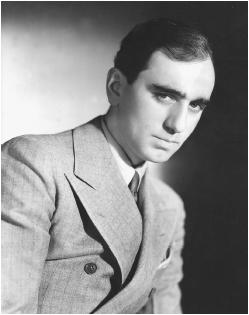
Busby
Berkeley was the choreographer of the film 42nd Street and was often
times called “Buzz” by Ruby Keeler. He
is well known for his overhead shots in films. As a result of not being a
trained dancer, he usually let the camera do all the movement (Faller). In an
interview Keeler said, “As a matter of fact, Buzz couldn’t dance. Didn’t do a
step. There were boys in the chorus he’d worked with before and he’d say,
‘Remember that step we did? Do it.’” Keeler also went on to say that the reason
why the dance floor was always shiny in his films was because he entertained
his audiences (Dunning).
 Some
examples of his work in 42nd street include “You’re Getting to Be a
Habit With Me,” “I’m Young and Healthy,” “Shuffle off to Buffalo,” and “42nd
Street” (M.H.). In “Shuffle off to Buffalo,” we get the illusion of being on a
train, by using amazing scenery and imagery. In a movie review from 1933 in the
New York Times, “Shuffle off to Buffalo” was considered to be “an excellent
example of stagecraft” (M.H.). Another example is in the title song “42nd
Street”. We see a close up of Keeler dancing, but when the camera pans out; we
see that Keeler is dancing on top of a taxi at the corner of Broadway and 42nd
Street (Fristoe).
Some
examples of his work in 42nd street include “You’re Getting to Be a
Habit With Me,” “I’m Young and Healthy,” “Shuffle off to Buffalo,” and “42nd
Street” (M.H.). In “Shuffle off to Buffalo,” we get the illusion of being on a
train, by using amazing scenery and imagery. In a movie review from 1933 in the
New York Times, “Shuffle off to Buffalo” was considered to be “an excellent
example of stagecraft” (M.H.). Another example is in the title song “42nd
Street”. We see a close up of Keeler dancing, but when the camera pans out; we
see that Keeler is dancing on top of a taxi at the corner of Broadway and 42nd
Street (Fristoe).
Berkeley
showed us in his musical numbers that he had a vivid imagination. It was very
popular during this time period for movies to show the backstage of the theater.
But in this movie it is “pictured brightly and with a degree of authenticity
that makes it diverting” (M.H). Berkeley stands out during his career for his
“innovative camera work, monumental dance numbers, and telling, teasing
glimpses of female flesh” (Dunning).
The
costumes in 42nd Street
were normal everyday clothes, which were typical of the time. Shorts were worn
for beach games, tennis, hiking, and they were even considered pyjamas
(anonymous). Men wore suits, or tuxes, in the 30’s. So it
would not come as a complete surprise that this is what the men wore in the
movie. Except, for rehearsals it was more undershirts and dress pants for the
dancers and suit pants with shirts and vests for almost everyone else.
 We
see examples of this fashion style during the rehearsal scenes. A woman dancing
in the front row is wearing a silk shirt with dark shorts. Using shorts as costumes
was due to the fact that it was fashionable to ride bicycles again (anonymous). Jumpsuits for women were also visible in the movie. In the scene
where Dorothy Brock sings “You’re Getting to be a Habit with Me” in
Philadelphia she is wearing a silk jumpsuit with gloves.
We
see examples of this fashion style during the rehearsal scenes. A woman dancing
in the front row is wearing a silk shirt with dark shorts. Using shorts as costumes
was due to the fact that it was fashionable to ride bicycles again (anonymous). Jumpsuits for women were also visible in the movie. In the scene
where Dorothy Brock sings “You’re Getting to be a Habit with Me” in
Philadelphia she is wearing a silk jumpsuit with gloves.
By using scenery
and costumes, we see what New York City and Philadelphia were like in 1933. The
movie was filmed during the depression and you can see the effect it had on
people who were wealthy and those that had very little. The character Abner
Dillon shows us his wealth, by wearing fancy suits as well as being driving
around in an expensive car. During the title song, we see vendors on the street
wearing average clothes. They show us that there was a depression going on
during that time and not every character in the movie was wealthy.
Some famous actors of that
time were casted in the film. They included Warner Baxter, Bebe Daniels, Una
Merkel, all of whom had successful careers before filming the movie. Ginger
Rogers later went on to have a successful career. She was best known for being
Fred Astaire’s dance partner. 42nd
Street also started a movie career for Ruby Keeler, who was working in New
York nightclubs where she was spotted by Earl Lindsay (a stage director) after
winning a dance contest. Another actor with a successful career after 42nd Street was Dick Powell,
who ended up being teamed with Ruby Keeler and became “one of the most popular
screen couples of the early 1930’s” (Holden).
Warner
Baxter, according to a 1933 article from the New York Times, gave “one of the
outstanding portrayals of his screen career” as Julian Marsh, the stage
director of the musical in the film “Pretty Lady.” Ruby Keeler, who played
Peggy Sawyer, added her own vibrant personality while singing and dancing (M.H.).
In the following clip you can see Ruby Keeler and Warner Baxter in a scene they
did together. One scene of the movie is where Julian Marsh (Warner Baxter) is
giving Peggy Sawyer (Ruby Keeler) a pep talk before the first scene of “Pretty
Lady.”- The clip of the scene is found below
The acting in this movie is typical for that
time period; from the speech that they used to the hand motions and walking.
During the 30’s it wasn’t uncommon for men to be filmed smoking cigars. The character,
played by Ned Sparks, who is a theatrical expert, is always seen chewing on a
cigar (M.H.). When watching the movie, the acting seems to be melodramatic with
the big eyes and over enunciation on words with big gestures. This was very
common in movies of the early to mid-1930s and it shows when watching movies
from that time.
In a review of the film, it is said to be “the liveliest and one of the most tuneful screen musical comedies that has come out of Hollywood” (M.H.). Classic movies, for example, 42nd Street, has inspired actors and many others over the years from the acting, choreography, and the costumes. This is proven with the recent film The Artist, and vintage clothing being brought back into style. In the words of Julian Marsh, “Sawyer, You’re going out a youngster but you’ve got to come back a star!”
In a review of the film, it is said to be “the liveliest and one of the most tuneful screen musical comedies that has come out of Hollywood” (M.H.). Classic movies, for example, 42nd Street, has inspired actors and many others over the years from the acting, choreography, and the costumes. This is proven with the recent film The Artist, and vintage clothing being brought back into style. In the words of Julian Marsh, “Sawyer, You’re going out a youngster but you’ve got to come back a star!”
Works Cited
Anonymous. "1933
Fashions." Delineator June 1933. 1933 Fashions. Vintageconnection.net. Web. 16 May 2012.
Dunning,
Jennifer. "FILM; Ruby Keeler Still Moves to a Berkeley Beat." The
New York Times. The New York Times, 07 July 1991. Web. 18 May 2012.
Faller, Greg S. "42nd Street." Encyclopedia.com. Web. 15 May 2012.
Fristoe,
Roger. "42nd Street." Tcm.com. Web. 16 May 2012.
H.,
M. "Patting On a Show." New York Times 10 Mar. 1933. Patting
On a Show. The New York Times. Web. 15 May 2012.
Holden,
Stephen. "Ruby Keeler, Tap-Dancing Actress, Is Dead at 82." New
York Times 01 Mar. 1993. The New York Times. The New York Times.
Web. 16 May 2012.
Phillips,
Jr., Michael W. "42nd Street, 1933." Goatdog's Movies - 42nd
Street, 1933. Web. 15 May 2012.
Times,
Seymour Peck; Seymour Peck Is Culture Editor Of The New York. "SUDDENLY
THE TALKIES COULD SING." New York Times 15 Nov. 1981. The New
York Times. The New York Times. Web. 15 May 2012.

No comments:
Post a Comment